

For example, the costs of heating and cooling a factory in Illinois will be highest in the winter and summer months and lowest in the spring recording transactions and fall. If the overhead rate is recomputed at the end of each month or each quarter based on actual costs and activity, the overhead rate would go up in the winter and summer and down in the spring and fall. As a result, two identical jobs, one completed in the winter and one completed in the spring, would be assigned different manufacturing overhead costs. To avoid such fluctuations, actual overhead rates could be computed on an annual or less-frequent basis.
Impact of Underapplied Overhead on Financial Statements

Big businesses may actually use different predetermined overhead rates in different production departments, as these may vary significantly. By having multiple rates like this, you can achieve a greater degree of accuracy. The downside is that it increases the amount of accounting labor and is therefore more expensive. In a company, the management wants to calculate the predetermined overhead to set aside some amount for the allocation of a cost unit.
Examples of Predetermined Overhead Rate
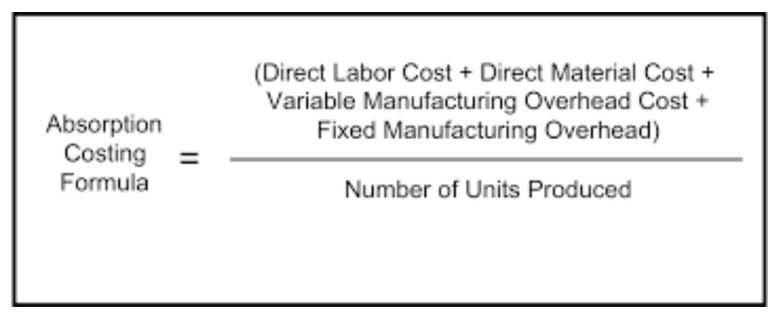
The predetermined overhead rate calculation shown in the example above is known as the single predetermined overhead rate or plant-wide overhead rate. Hence, this predetermined overhead rate of 66.47 shall be applied to the pricing of the https://www.bookstime.com/ new product VXM. This option is best if you have some idea of your costs but don’t have exact numbers. Let’s say we want to calculate the overhead cost of a homemade candle ecommerce business. This predetermined overhead rate can be used to help the marketing agency price its services.
- The differences between the actual overhead and the estimated predetermined overhead are set and adjusted at every year-end.
- By reviewing and adjusting the predetermined overhead rate regularly, a company can ensure that its overhead costs are allocated correctly and that it is operating efficiently.
- Regular reviews and adjustments are necessary to ensure that the predetermined overhead rate remains accurate and relevant.
- Underapplied overhead can have significant effects on a company’s financial statements.
- This can happen due to a variety of reasons such as inaccurate estimation of the overhead costs, changes in the production process, or unexpected events.
- Overhead expenses are generally fixed costs, meaning they’re incurred whether or not a factory produces a single item or a retail store sells a single product.
Using the Overhead Rate
Ahead of discussing how to calculate predetermined overhead rate, let’s define it. A predetermined overhead rate(POHR) is the rate used to determine how much of the total manufacturing overhead cost will be attributed to each unit of product manufactured. For this, you can take the average manufacturing overhead cost for the previous three months, and divide this by the machine hours in the current month.

Without a predetermined rate, companies do not know the costs of production until the end of the month or even later when bills arrive. For example, the electric bill for July will probably not arrive until August. If Creative Printers had used actual overhead, the company would not have determined the costs of its July work until August. It is better to have a good estimate of costs when doing the work instead of waiting a long time for only a slightly more accurate number. It is essential to review the predetermined overhead rate periodically to ensure that it is still accurate and relevant. Changes in the company’s operations or market conditions can affect the estimated total overhead costs, the estimated total amount of the allocation base, or the estimated level of activity.
- Underapplied overhead is a significant issue for companies as it can affect their profitability and financial reporting.
- In order to find the overhead rate we will use the same basis that we have chosen by multiplying this basis by the calculated rate.
- For example, a single plant-wide rate is easy to calculate but may not accurately reflect the overhead costs of each department.
- As a result, two identical jobs, one completed in the winter and one completed in the spring, would be assigned different manufacturing overhead costs.
- In recent years increased automation in manufacturing operations has resulted in a trend towards machine hours as the activity base in the calculation.
The company, having calculated its overhead costs as $20 per labor hour, now has a baseline cost-per-hour figure that it can use to appropriately charge its customers for labor and earn a profit. That is, the company is now aware that a 5-hour job, for instance, will have an estimated overhead cost of $100. Underapplied overhead can pohr formula have a significant impact on a company’s financial statements, gross profit margin, balance sheet, and pricing decisions. It is important for companies to monitor their overhead costs and adjust their prices accordingly to avoid negative consequences.
- According to a survey 34% of the manufacturing businesses use a single plant wide overhead rate, 44% use multiple overhead rates and rest of the companies use activity based costing (ABC) system.
- For example, let’s say the marketing agency quotes a client $1,000 for a project that will take 10 hours of work.
- The overhead rate of cutting department is based on machine hours and that of finishing department on direct labor cost.
- The second step is to estimate the total manufacturing cost at that level of activity.
- It is better to have a good estimate of costs when doing the work instead of waiting a long time for only a slightly more accurate number.
- This is important because the actual overhead costs incurred may be different from the estimated overhead costs.
Direct Costs vs. the Overhead Rate
- The predetermined overhead rate is, therefore, usually used for contract bidding, product pricing, and allocation of resources within a company, based on each department’s utilization of resources.
- There are several methods that companies can use to deal with underapplied overhead.
- Hence, the overhead incurred in the actual production process will differ from this estimate.
- By continuously improving the production process, the overhead costs can be reduced, which can prevent underapplied overhead.
- So, if you were to measure the total direct labor cost for the week, the denominator would be the total weekly cost of direct labor for production that week.
- But before we dive deeper into calculating predetermined overhead, we need to understand the concept of overhead itself.
In this section, we will discuss the impact of underapplied overhead on a company’s financial statements. In summary, Predetermined Overhead Rate is an essential tool used in accounting to estimate and allocate indirect costs to products or services. POR is predetermined because it is calculated before the actual costs are incurred. POR helps companies to allocate indirect costs accurately to products or services, providing a more accurate picture of the true cost of production. This includes keeping track of the actual overhead costs incurred and the activity levels during the period.

Do you own a business?
If you’d like to learn more about calculating rates, check out our in-depth interview with Madison Boehm. This can result in abnormal losses as well and unexpected expenses being incurred. E-commerce is the process of buying and selling goods or services online, using digital platforms… Adam Hayes, Ph.D., CFA, is a financial writer with 15+ years Wall Street experience as a derivatives trader.